creator of the liberation method™
Education • Somatics • Community
For more than twenty years I have lived inside one question.
What becomes possible when healing, justice, and community are practiced as one integrated way of living?
The Liberation Method™ is my answer.
The Question
Most pages like this one begin with credentials.
This one begins with a question, because the question came first, and everything else — the counseling work, the classrooms, the organizations, the land, the Method itself — exists because of it.
I have spent my life inside that question. Not studying it from a distance. Living it.
The Living Laboratory
Everything I teach has been practiced in what I call the Living Laboratory.
Not perfected. Practiced.
As an educator. As a counselor. As a parent. As a community builder. As a leader. As someone navigating disability. As someone building organizations rooted in healing, justice, and belonging.
I teach what I continue to practice.
Liberation is a Lifestyle™ is the philosophy. The Liberation Method™ is the methodology. Education • Somatics • Community is the practice. The Living Laboratory is where all three are tested — in real bodies, real households, real organizations — and the evidence that returns from it keeps shaping the work.
The Story
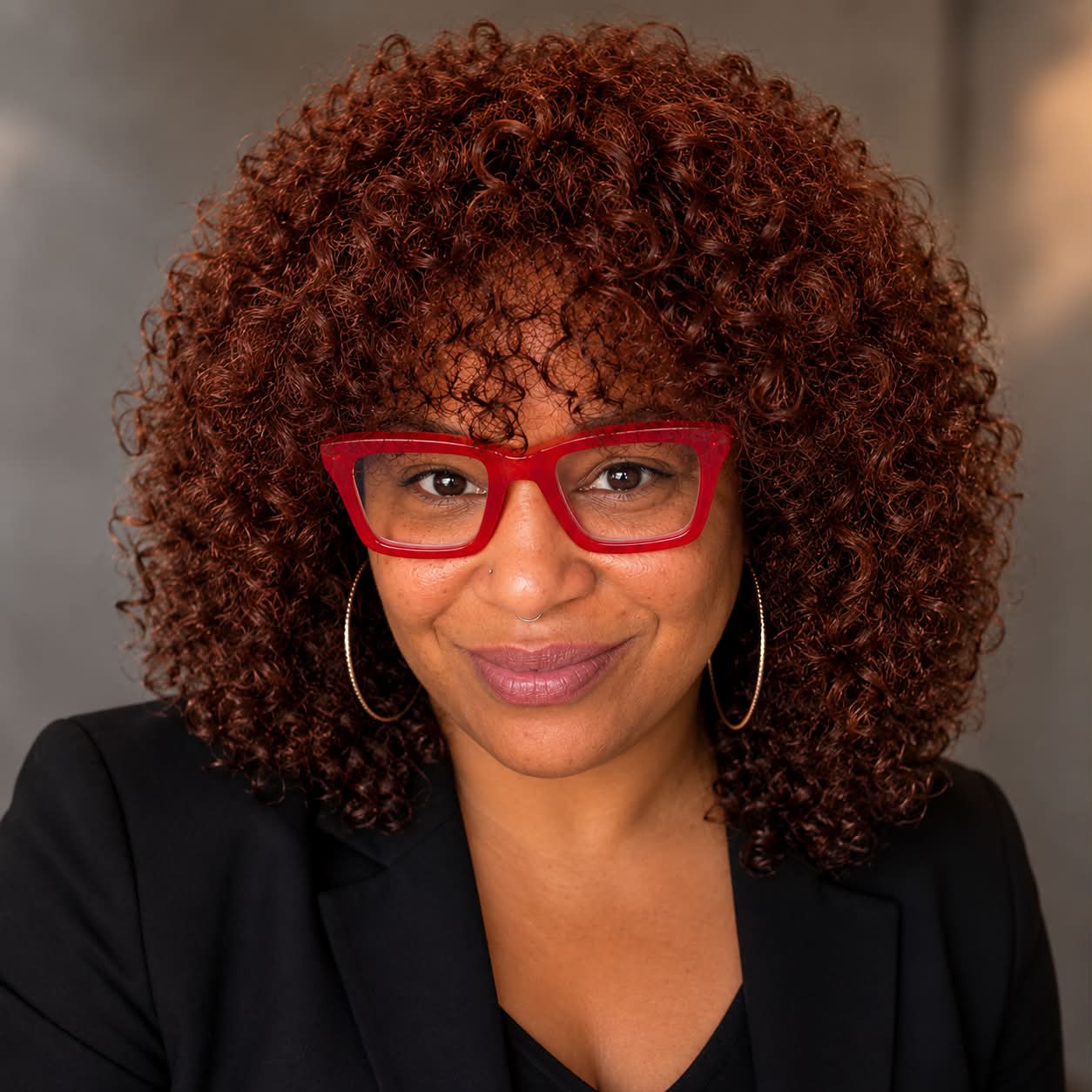
I am a Black woman and an Irish woman. A second-generation American. A daughter of the South Bronx, raised in working-class poverty. A mother. A disabled person. A counselor, an educator, a writer, a community builder.
I list those not as identities to admire but as locations, places where I learned, in my body, how systems work. What they extract. What they withhold. What survives them anyway.
The South Bronx taught me that community is not a concept. It is how people stay alive. It is food that stretches, doors that open, elders who watch, cousins who tell the truth. Long before I had language for mutual aid or collective care, I was raised inside them.
I grew up in the aftermath of white flight, in the years when people called the neighborhood Fort Apache and the burned-down Bronx. The news told one story about where we lived. The people living there told another.
What I remember most is that everyone seemed to know who belonged to whom. Neighbors watched children that weren't theirs. Elders corrected kids that didn't live in their house. People checked on one another. Food stretched farther than it should have gone. Folks who didn't have much still found ways to make sure nobody had nothing.
There were abandoned buildings, poverty, and all the things people point to when they want to explain what was wrong with a community. What I remember is what was right with it. I remember people creating safety for one another when systems failed to do it. I remember care that wasn't organized by institutions or nonprofits or mission statements. It was simply what people did.
Years later, I would learn words like mutual aid, collective care, and interdependence. But by then I already knew what they looked like. I had grown up inside them.
Poverty taught me how systems look from underneath. Disability taught me what pace really costs and what it protects. Motherhood taught me that liberation is not an idea you hold; it is a household you build. And decades of counseling work taught me the thing that eventually became the center of everything:
People can name what harms them and still repeat it. Awareness, by itself, does not set anyone free.
I watched brilliant, self-aware, justice-committed people describe their patterns with perfect clarity and then live them anyway. I watched organizations declare equity and hoard power. I watched families claim love and avoid repair. I watched myself do all of it too.
Somewhere in those years the question stopped being professional and became personal. Healing was being taught as a private project: something you did in a therapist's office, alone. Justice was being taught as a political project: something you did in the streets, against systems. And neither one was working on its own, because they were never separate.
Personal healing and systemic change are the same project.
I came to understand it not as theory but in my own nervous system, my own home, my own community. When I did, the work found its shape.
The Work
For over twenty years, Desireé B. Stephens has worked at the intersection of education, counseling, community building, systems change, and liberation practice.
I founded Make Shi(f)t Happen to house that understanding. An organization built on the premise that you cannot shift culture without shifting the agreements underneath it: how we hold power, how we repair, how we belong to one another.
From it grew a single body of work with many doors:
Liberation is a Lifestyle: the philosophy. Liberation not as an event, an identity, or a performance, but as a daily practice lived in body, home, work, and community.
The Liberation Method™: the methodology. A somatic, relational, and systemic framework for practicing that philosophy: reclaiming memory, developing consciousness, building liberated culture.
Liberation Education: the teaching body: the podcast that explores the ideas, the newsletter that deepens them, the Academy where people practice them in structured community.
The Healing Homestead: the land. A living laboratory in Southwest Atlanta where the philosophy is not presented but lived: food sovereignty, ceremony, somatic practice, collective care.
Speaking & Consulting: the work carried into rooms that need it: organizations, schools, institutions, and movements learning to reclaim organizational memory, develop organizational consciousness, and build liberated culture.
None of these are products of a brand. They are expressions of one question, practiced in public.
The professional record sits underneath all of it rather than in front of it: two decades as a counselor and educator, years of curriculum design and facilitation, organizational consulting inside schools, nonprofits, healthcare systems, and businesses, and ongoing study that keeps the work evidence-informed and trauma-informed. Those credentials matter to me not as accomplishments but as evidence of long-term practice and continued learning.
What Guides the Work
Liberation is practiced. Education creates awareness. Somatics create embodiment. Community sustains transformation. That is the whole of it, and it is the same whether the room holds one person or an entire organization.
This work is rooted in hope rather than fear. There is no urgency here, no scarcity, no promise that awareness alone will change a life. Only practice, at a pace a nervous system can stay with.
Transparency is a liberation practice. That is why the goals, the budgets, the progress, and the limits of this work are published openly — including the parts that are unfinished. I would rather you see the practice honestly than see a polished version of it.
The Invitation
Here is what I want you to know about this work.
It was never intended to create dependence on one teacher. I built it to be transmitted: to practitioners, facilitators, educators, parents, neighbors, and leaders who will carry it into rooms I will never enter and years I will never see.
Its purpose is lineage.
If the question that opened this page lives in you too, what becomes possible when healing, justice, and community are practiced as one integrated way of living, then you already belong in this work. Start where you are. Move at the pace your nervous system can stay with.
The doorways are open.
Where the Founder Sits
Liberation is a Lifestyle™ is the philosophy. The Liberation Method™ is the methodology. Education • Somatics • Community is the practice. My role is to begin the work and steward it well. The institution's role is to carry it forward.
- The Liberation Method™The methodology the practice became.
- The AcademyWhere the Method is taught and practiced.
- The Liberation Practice Library™Where the practice continues in everyday life.
- The Praxis Calendar™Where the practice is kept in rhythm.
- The CommunityWhere the practice is sustained together.
- The HomesteadWhere the practice lives on the land.
And then future practitioners — the educators, counselors, parents, facilitators, leaders, and communities who will teach and steward this methodology in rooms I will never enter. The success of this work is not measured by the visibility of one person. It is measured by how many people continue practicing it for generations.
Founder's Intent
The purpose of this page is not to elevate me. It is to help you understand the decades of practice, reflection, study, community building, and lived experience that gave rise to The Liberation Method™.
I am not someone who has finished this work. I am someone who continues to practice it — publicly, transparently, and in relationship with the communities I serve.
The institution should always be larger than the individual.
The Canon
The Ideas Behind the Work
For those who want to go deeper than a website allows: the philosophy, the Method, the Movements, the frameworks, the influences, and the record of how this body of work came to be. The Canon is being assembled as the public intellectual home of Liberation is a Lifestyle — the record future practitioners, researchers, and stewards will inherit.
The Evidence
The Living Laboratory in Practice
Every methodology makes promises.
The true measure of those promises is found in practice. For more than two decades, The Liberation Method™ has been practiced in classrooms, living rooms, organizations, healing spaces, and communities.
The stories collected here are not testimonials.
They are observations from the Living Laboratory. They are reflections from people practicing liberation in their own lives.
Together they become part of the ongoing development of this institution.